
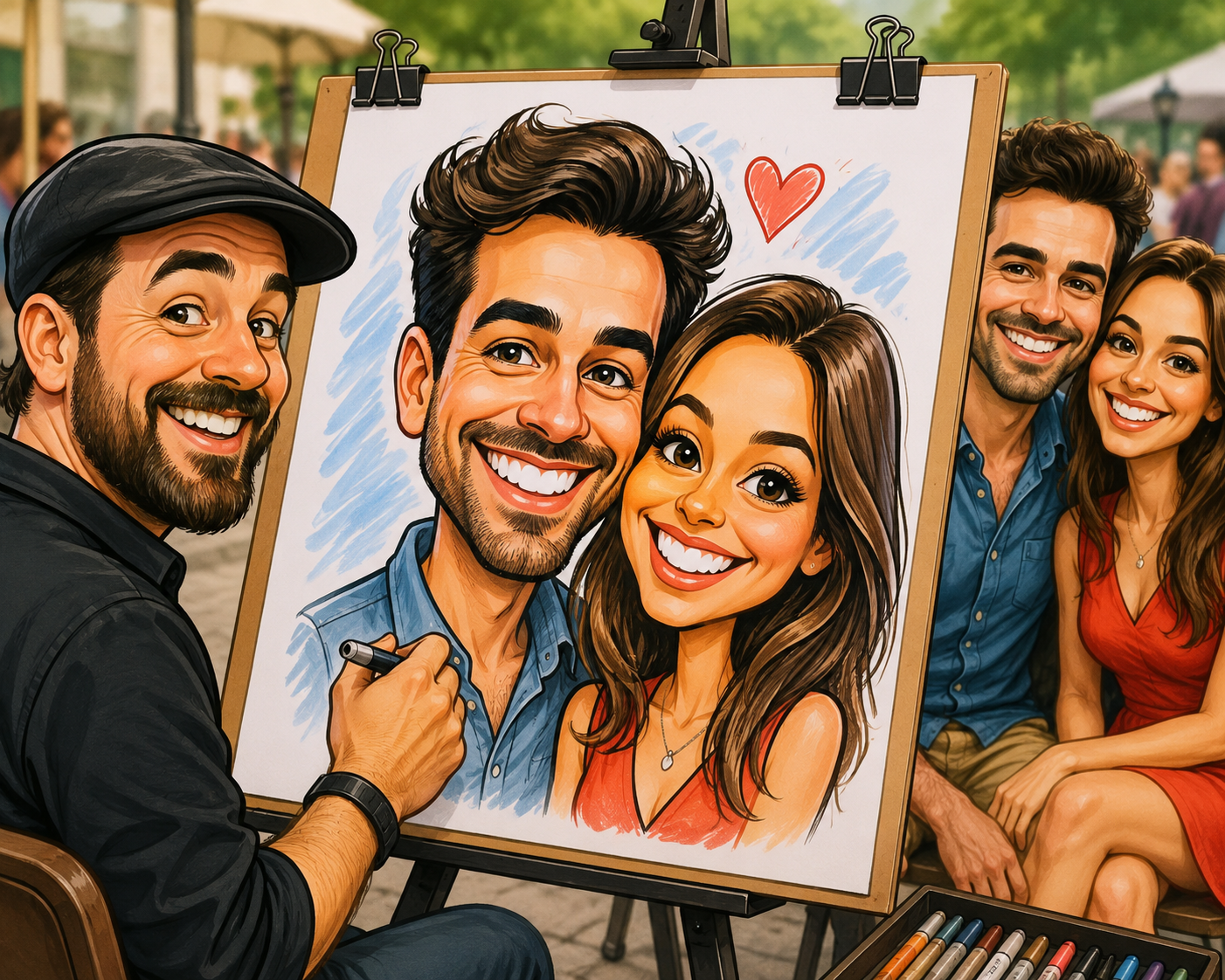
Learning how to draw a caricature is a fun way to combine portrait art, humor, and creative exaggeration. A successful caricature makes certain facial features larger, smaller, wider, or more expressive while still keeping the person recognizable.
You do not need to be a professional artist to begin. With careful observation, simple shapes, and regular practice, you can create funny cartoon portraits that capture both a person's appearance and personality.
What Is a Caricature?
A caricature is an illustrated portrait that exaggerates a person's most noticeable features. An artist might enlarge the eyes, stretch the chin, widen the smile, or make the hair more dramatic.
The goal is not simply to make someone look strange. A good caricature emphasizes what makes the person visually unique while preserving enough likeness for friends and family to recognize them immediately.
Materials You Need
You can start drawing caricatures with a few basic supplies:
- Pencil and eraser
- Sketchbook or drawing paper
- Black pen or fine-tip marker
- Colored pencils or markers
- A clear reference photo
Digital artists can use a drawing tablet, stylus, and illustration software. However, the same observation and exaggeration techniques apply to both traditional and digital caricature art.
Step 1: Study the Person's Face
Before drawing, spend a few minutes studying the subject. Look for the features that stand out most.
Ask yourself:
- Is the face round, square, narrow, or long?
- Are the eyes large, small, close together, or far apart?
- Is the nose wide, pointed, curved, or short?
- Does the person have a large smile or distinctive eyebrows?
- Is the hairstyle an important part of the person's appearance?
These observations will help you decide which features to exaggerate.
Step 2: Draw the Basic Head Shape
Begin with the overall shape of the head. Instead of automatically drawing a perfect oval, look closely at the subject's natural proportions.
A person with a wide forehead and narrow chin might be represented with a triangle-like shape. Someone with full cheeks might begin with a wide circle. A long face could start with a stretched oval.
Keep your first lines light so you can make changes easily.
Step 3: Add Guidelines
Draw a light vertical line through the center of the face. Then add horizontal guidelines for the eyes, nose, and mouth.
These lines help keep the features organized, even when you intentionally exaggerate their size or position. Caricatures can be playful, but the face should still feel connected and balanced.
Step 4: Exaggerate One or Two Features
Beginners often make the mistake of exaggerating every feature at once. This can make the drawing confusing and reduce the person's likeness.
Start by choosing one or two dominant features. For example, you might draw a larger smile and a smaller chin. You could enlarge the eyes while keeping the nose close to its natural size.
Step 5: Draw the Eyes and Eyebrows
The eyes are important because they communicate personality and emotion. Study their shape, direction, spacing, and expression.
Eyebrows can also add humor and energy. Raised eyebrows may create surprise, while sharply angled eyebrows can suggest confidence or determination.
Include highlights in the pupils to make the eyes feel more lively.
Step 6: Draw the Nose and Mouth
The nose can become a strong focal point in a caricature. Pay attention to the bridge, nostrils, width, and angle.
The mouth should reflect the person's natural expression. If the subject is known for smiling, make the smile one of the main features. Show the curve of the lips, visible teeth, dimples, or laugh lines.
Step 7: Add Hair, Ears, and Accessories
Hair can help make a caricature instantly recognizable. Focus on the overall shape instead of drawing every individual strand.
You can also emphasize distinctive accessories such as glasses, hats, earrings, facial hair, or a favorite necklace. These details often strengthen the personality of the portrait.
Step 8: Add a Small Cartoon Body
Many traditional caricatures combine an oversized head with a smaller cartoon body. This creates a playful and humorous appearance.
You can place the person in a pose connected to a hobby, job, or favorite activity. A golfer might hold a club, a chef might stand beside a mixing bowl, or a musician might play a guitar.
Step 9: Refine the Lines
Once you are satisfied with the sketch, trace the strongest lines with a pen or darker pencil. Remove unnecessary guidelines and clean up the outline.
Varying the line thickness can make the artwork more interesting. Use thicker lines around the outside of the head and thinner lines for smaller facial details.
Step 10: Add Color and Shading
Color can make a caricature feel more complete. Choose skin tones, hair colors, clothing, and background details that match the subject.
Add simple shadows beneath the chin, nose, hair, and clothing folds. You do not need highly realistic shading. Clean, simple color often works best for cartoon-style portraits.
Common Caricature Drawing Mistakes
Exaggerating Every Feature
Too much exaggeration can make the person difficult to recognize. Choose the most distinctive features and keep the others simpler.
Ignoring the Head Shape
The overall face shape is often more important than small details. Study the forehead, cheeks, jaw, and chin carefully.
Drawing From Memory
Beginners should use a clear reference photo. Trying to remember facial details can lead to inaccurate proportions.
Making the Expression Too Stiff
Caricatures should feel lively. Use expressive eyebrows, curved lines, and an energetic pose.
How to Practice Caricature Drawing
The fastest way to improve is to draw many different faces. Practice with family photographs, public-domain portraits, or willing friends.
Try making several versions of the same person. In one drawing, exaggerate the eyes. In another, focus on the jaw or hairstyle. Comparing the results will help you understand which features create the strongest likeness.
Traditional vs. Digital Caricature Drawing
Traditional drawing is useful for learning line control and observation. Digital drawing provides additional flexibility because you can resize features, undo mistakes, add layers, and experiment with color.
Neither method is better for every artist. Beginners can practice on paper first and later recreate their favorite sketches digitally.
Frequently Asked Questions
Can anyone learn to draw caricatures?
Yes. Caricature drawing is a skill that improves through observation and practice. You do not need advanced portrait experience to begin.
How much should I exaggerate a face?
Exaggerate enough to make the drawing humorous, but not so much that the subject becomes unrecognizable. Begin with subtle changes and increase them gradually.
What is the easiest feature to exaggerate?
The hairstyle, smile, nose, jaw, and eyes are often the easiest features for beginners to exaggerate.
Can I draw a caricature from a photo?
Yes. Choose a sharp, well-lit photograph that clearly shows the subject's face and expression.
Final Thoughts
Learning how to draw a caricature begins with careful observation. Study the face, identify the most distinctive features, and exaggerate them while preserving the person's likeness.
Do not worry if your first drawings are imperfect. Every sketch teaches you more about facial proportions, expressions, and visual storytelling. Keep practicing, experiment with different styles, and enjoy creating portraits that make people smile.